Guinness the Therapy Dog turns four years old today! What a big boy!
Because of COVID-19, his therapy visits have ended–just for a short time. He misses all the kids at the shelter and at the library, so I read his book to him.
Did you see the weekend’s special pricing? Lots of people took advantage of the ‘free book weekend’ for the Fairies of Carlow series.
I hope you were able to download your copy.
Enjoy the books, and I hopy you send Guinness some birthday wishes! Sonja
I would probably choose archaeology. Not of Egyptian culture, as is so prevalent, but of medieval European culture–mainly England and Scotland. Maybe a bit of Ireland, too.
I used to watch a British show that followed archaeologists around Britain. It was fascinating! I love how they could pick up a shard from a plate or a jug and know the provenance.
After watching this for a while (and feeling jealous!) I decided I didn’t need to be an actual archaeologist to learn the history. And that’s what I wanted: to know history.
Not just dates, but how people lived from day-to-day. That’s where the magic is for me.
That may be why I write stories set in the Middle Ages in my alternate life. I like people to get along so I write romances, stories that tell of the daily events that lead up to love. It’s more fun that they are wearing gowns and tunics!
Yes, that’s Book 2 of the Guinness the Therapy Dog series. Entitled ‘Guinness Goes to the Library’, this book tells about Guinness’s adventures when he takes part in the Read-to-a-Dog program at the public library.
He likes to listen to the younger kids read books to him, especially when they show him the pictures. In this book, Guinness reveals one of his special powers: he can see colors! Most dogs only see black and white, but he can see all the colors of the rainbow.
I hope you enjoy reading about Guinness’s adventures. Sonja
This is the cover for the first book in the Guinness the Therapy Dog series. This is a new series featuring Guinness, a 95-pound Bernese Mountain Dog, who wants to do something meaningful.
At the suggestion of his older sister, Lucy, a rescued mutt, he decides to become a therapy dog.
Read about what it took to become a certified therapy dog–training, assessments, and a whole lot of self-control!
Available exclusively on amazon.com, these books are available in paperback and ebook.
I hope you enjoy reading about Guinness the Therapy Dog! Sonja
I took the following verbiage and hashtags from www.internationalwomensday.com. I added the Oxford comma at the end of the text:
International Women’s Day (March 8) is a global day celebrating the social, economic, cultural and political achievements of women. The day also marks a call to action for accelerating women’s equality.
International Women’s Day (IWD) has occurred for well over a century, with the first IWD gathering in 1911 supported by over a million people. Today, IWD belongs to all groups collectively everywhere. IWD is not country, group, or organization specific.
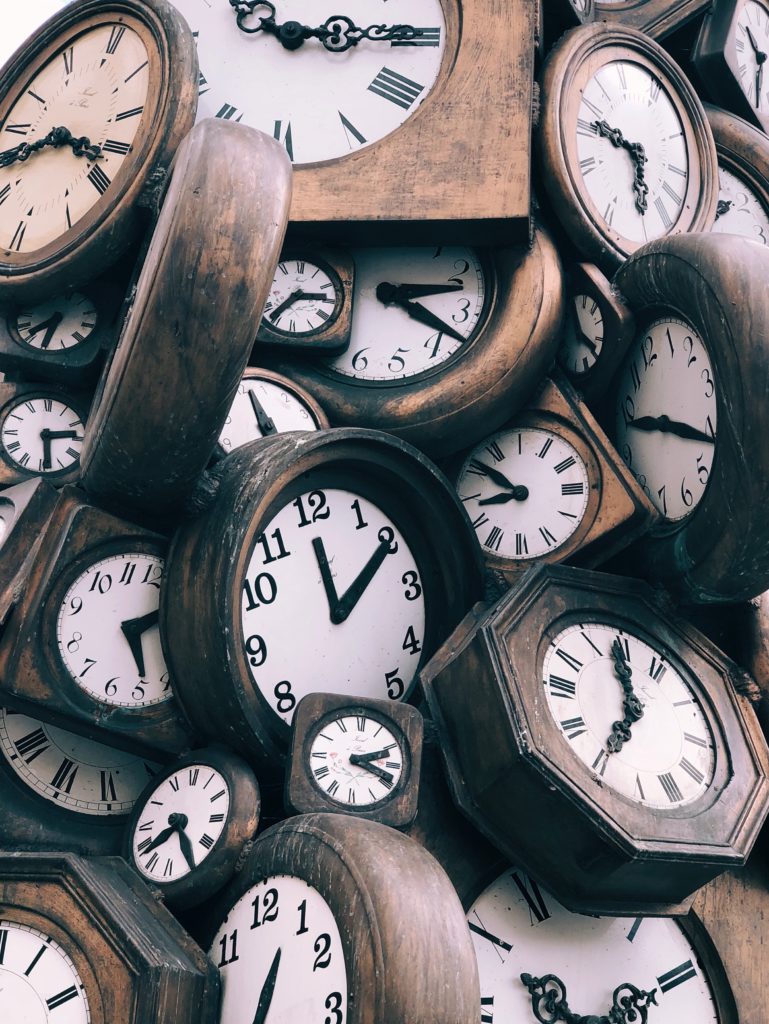
Unless you live in a place that doesn’t observe Daylight Savings Time (DST), you need to move the hands of time tonight.
DST goes into effect tomorrow morning. Since it’s Spring, you need to turn the clocks forward one hour, which moves the morning to an earlier time. Hello, caffeine!
You can thank Germany and Austria for DST. They were the first countries to use the new time in 1916 to make better use of fuel during the war. This was adopted by several other countries just weeks later, including the United Kingdom and France.
DST was rescinded at the end of WWI and was repeated for WWII. Today, more than seventy countries observe DST.
A plan to make the most of seasonal daylight was actually put forth by Benjamin Franklin. Yes, that Benjamin Franklin. One of the Founding Fathers of the United States.
But he meant it as a joke–for Parisians.
He was living in Paris and wrote a letter to the editor of the Journal of Paris. The essay, entitled “An Economical Project for Diminishing the Cost of Light”, called for the people of that city to awaken earlier in order to reduce their need for candles.
Oh, that Ben. What a kidder.
The citizens of Ancient Rome relied on water clocks that used different scales throughout the year in order to follow the solar calendar.
But B. Franklin and Caesar are not credited with the invention of DST. That honor goes to New Zealander George Vernon Hudson and British builder William Willett. Do you thank them or curse them? I think that depends on which way the clock is bouncing–a thank you for the ‘extra’ hour in the Autumn and a curse for losing an hour in the Spring.
We can all be thankful that their particular schedule didn’t go into place. Hudson suggested moving the clocks by two hours, and Willett wanted the clocks to move in twenty-minute increments over four-week periods.
Wow. And you thought one hour twice a year was hard!